A 29-year-old YouTuber now matches France’s biggest network in audience trust. TF1 is partnering with him — and creators like him — to lend the newsroom some of that credibility. Early results suggest some of these alliances aren’t working
A newsroom with no dedicated social staff used the cohort to assemble a cross-team working group and plan its first original creator collaboration, a series on the city's beloved sausage culture.
For a nonpartisan newsroom covering politics, the toughest part of a creator partnership came before any outreach: deciding which creators it could work with without putting its credibility at risk.
Young People Aren't Avoiding News. They're Avoiding You.
New research from FT Strategies and Knight Lab breaks the myth — plus why the "E" in STEPP matters more than ever, and what we're up to at the Saudi Media Forum.
There's a persistent myth in newsrooms that young people have abandoned news. The data tells a different story and it has major implications for how newsrooms should be thinking about creator partnerships.
What the Data Actually Shows
Last week, FT Strategies and Northwestern University's Knight Lab released Next Gen News 2, a comprehensive study of how young audiences discover, consume, and share news. The research surveyed 5,000 respondents across five countries—the U.S., U.K., Brazil, India, and Nigeria—and conducted in-depth diary studies with 84 young adults.
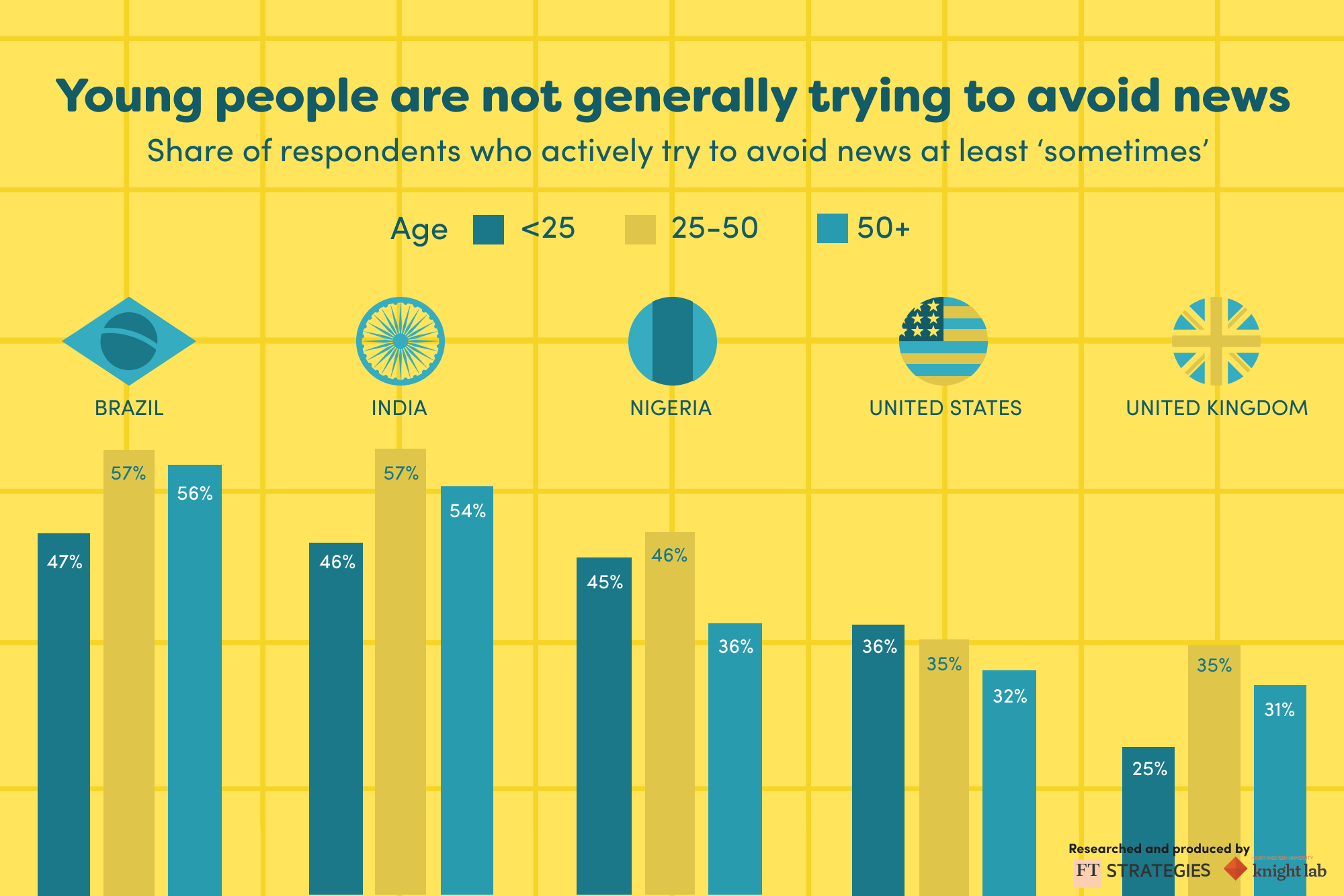
The headline finding? Young people are not generally trying to avoid news.
Across all five countries, 55% of respondents under 25 engage with news at least daily. In Brazil, that number jumps to 63%. And here's what might surprise you: in three of the five countries studied (Brazil, India, and the U.K.), young people are less likely to actively avoid news than their older counterparts.
The real issue is overwhelm. Nearly 54% of young people agree that "keeping up with the news should not take up very much time." They're employing strategies like taking breaks, deleting apps, and turning off notifications. But when they encounter information they care about, they engage deeply. More than 65% said that when a topic interests them, they prefer an in-depth story to a summary.
This is the opportunity. Young audiences want meaningful journalism. They just want it delivered in ways that respect their time and meet them on their preferred platforms.
The research confirms what we've been documenting through our work and case studies: social platforms dominate news discovery for younger audiences. For respondents under 25, social media (76%) and video platforms like YouTube (66%) are among the top ways they encounter news, outpacing traditional broadcast for this demographic.
This is precisely where creator partnerships become essential. Creators have already built trust and fluency on these platforms. They understand the culture, the algorithms, and how to translate complex information into formats that resonate.
Take the High Country News case study we published. For 50 years, this independent newsroom relied on direct mail to find readers. When they partnered with Teal Lehto (@westernwatergirl), who explains Western water policy to nearly 100,000 followers, they entered conversations they couldn't access on their own.
One video about a hospital on the Navajo Nation that couldn't open due to water infrastructure issues went viral. Shortly after, the hospital opened. That's the power of meeting audiences where they are with information that matters.
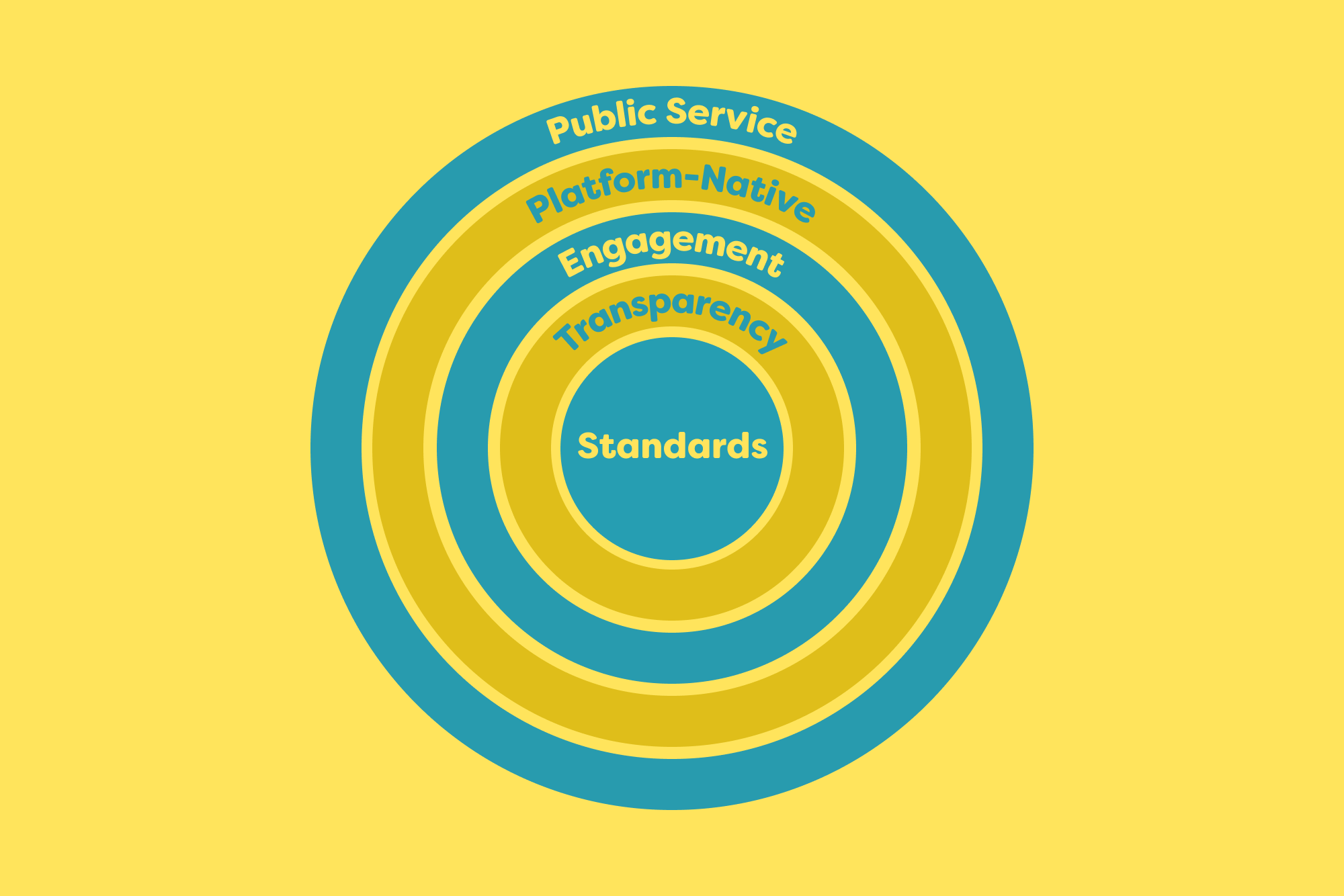
This week's research reinforces why Engagement—the E in our STEPP Framework—matters so much for newsroom-creator partnerships.
The Next Gen News 2 research introduces "Modes of Engagement" to describe how young audiences interact with news: they Scroll (encountering news incidentally), Seek (actively searching), Subscribe, Substantiate (verify), Study (go deep on topics), and Sensemake (explore perspectives).
For newsrooms working with creators, engagement isn't just about reach metrics. It's about building relationships that create genuine connection with audiences.
That means:
Responding to comments. When audiences engage with creator content about your journalism, they're signaling interest. Don't let that go unanswered.
Building two-way value. The most successful partnerships benefit both parties. What can you offer creators beyond compensation? Access to sources? Editorial support? The partnership should feel mutually enriching.
Thinking long-term. One-off campaigns rarely build the trust needed to meaningfully extend journalism's reach.
Listening to communities. Creators have deep insight into their audience's needs, concerns, and information gaps. Use these partnerships to learn, not just to broadcast.
🇸🇦 We're in Riyadh this week for the Saudi Media Forum — Adriana is speaking on panels about creator-newsroom partnerships and meeting audiences where they are.
📊 Next Gen News 2 Full Report — FT Strategies and Knight Lab surveyed 5,000 young people across five countries to understand how they actually discover and consume news. The full findings are well worth your time.
🎬 Here's our take on the Next Gen News 2 Report — There’s a narrative that’s been floating around newsroom leadership for years: young people don’t care about news. They’re checked out. They’d rather watch TikTok dances than read about city council meetings. It’s a convenient story, because it lets legacy news organizations off the hook for failing to evolve.
📲 High Country News Case Study — We published this one last week and it's still on our minds. A 50-year-old newsroom that went from direct mail to partnering with a TikTok creator and saw real impact.
📚 The STEPP Framework — If you're new here, this is our comprehensive guide to building ethical creator-newsroom partnerships. It's the foundation everything we do is built on.
Before You Find Creators, Map Your Ecosystem
One of the biggest mistakes newsrooms make is jumping into creator partnerships without understanding who's already in their space. That's why we don't just help you find influencers—we do influencer mapping.
Our Ecosystem Reports give you a comprehensive view of the creator landscape in your coverage area before you even start: who's talking about the issues you cover, what platforms they're on, what their audiences look like, and where the opportunities (and gaps) exist.
With our network of 50+ researchers across more than 20 countries, we're positioned to do this work internationally as well—whether you're a local newsroom in the Midwest or an international organization looking to understand creator ecosystems in multiple markets.
Interested in an ecosystem report for your area? Let's talk.
Adriana Lacy is the founder and CEO of Field Nine Group, where she leads Influencer Journalism and developed the STEPP Framework for ethical newsroom-creator partnerships. Previously, she worked at The New York Times, LA Times, and Axios.