A statewide newsroom pivoted from outdoors creators to an immigration investigator and came away with two co-reported investigations and a reusable collaboration agreement other newsrooms can adopt.
A 29-year-old YouTuber now matches France’s biggest network in audience trust. TF1 is partnering with him — and creators like him — to lend the newsroom some of that credibility. Early results suggest some of these alliances aren’t working
A newsroom with no dedicated social staff used the cohort to assemble a cross-team working group and plan its first original creator collaboration, a series on the city's beloved sausage culture.
How a French Broadcaster Is Racing to Transfer a Creator’s Trust back to the newsroom
A 29-year-old YouTuber now matches France’s biggest network in audience trust. TF1 is partnering with him — and creators like him — to lend the newsroom some of that credibility. Early results suggest some of these alliances aren’t working
Hugo Travers was an 18-year-old college freshman when he launched the “HugoDécrypte - Actus du jour” YouTube channel from his dorm room. Eleven years later, it reached 22% of French under-35s, according to Reuters Institute’s 2025 Digital News Report. That reach translates into an outsized influence: a 2024 Reuters survey found he’s cited more often than Le Monde, Le Figaro, and Libération combined, among people who used social networks for news. By May 2025, a Harris poll had him tied with TF1, France’s biggest private network, in trust among under-35s — at 18% each. This means four out of five young French people trust neither one of them. At 29, Travers commands over 20 million followers across YouTube, TikTok, and Instagram.
Travers is now a news guide to millions, but he didn’t start that way. “I was lost,” he told France Culture, describing how he felt watching political shows as a student. That’s when he started explaining the news to his 15-year-old sister. He got his first real breakthrough reacting live to the 2022 presidential debate between Emmanuel Macron and Marine Le Pen. A single Twitch livestreaming with real-time commentary drew 697,341 views.
When Macron traveled to Washington in February 2025 to press Trump on Ukraine, Travers covered the visit from inside the White House and even asked Trump about Vladimir Putin.
Influencer Journalism spent months attempting to reach TF1, Hugo Travers and Gaspard Guermonprez, another creator the broadcaster has been working with, but they didn’t respond to our attempts. To grasp what these alliances represent, what’s been working and doesn't, we turned to Pierre Caulliez, a French media industry leader who has worked with newsrooms and creators across Europe to track how young audiences consume news.
Caulliez observed that young French people type “information + HugoDécrypte” into TikTok just to check if something’s true. “That’s quite remarkable,” Caulliez told Influencer Journalism.
TF1 is answering on various fronts: commercial deals with creators, including HugoDécrypte; editorial co-productions; original podcasts; a streaming platform (TF1+); and a distribution partnership with Netflix. Caulliez sees TF1’s experimentation as a step forward, a sign legacy media may be learning creators’ mindset: test formats fast, see what works, adapt in real time. But he’s not convinced TF1 is learning fast enough. “The media environment changes extremely quickly,” he says.
Thierry Thuillier, TF1’s Director of Information, isn’t new to this. He ran one of the group’s earliest creator experiments back in 2017, when LCI, its 24-hour news channel, signed HugoDécrypte for a weekly political segment and a 5-minute travel reportage that aired Sunday mornings. Travers later admitted to researchers at CELSA Sorbonne Université that the slot was bad: “very few young people watch television” then. Nine years and several formats later, TF1’s improved: they are betting on meeting audiences on every platform instead of waiting for them to come back to TV.
Subscribe to the Influencer Journalism Newsletter
No spam. Unsubscribe anytime.
In an interview with Le Figaro, Thuillier argued that success can no longer be measured by TV ratings alone and that media is no longer a “closed world.” He said that growth, now, happens digitally. In this sense, the executive is convinced that “the 2027 presidential election will be an accelerating factor in the transformation of habits.” To Thuillier, in order to “remain a reference media outlet when it comes to news”, TF1 has to be “able to build alliances” and the presidential elections next year will be the perfect testing ground for that.
Gaspard G: The Outsider TF1 Brought In-House
TF1’s newest bet is Gaspard Guermonprez, known online as Gaspard G, a 28-year-old political content creator with 1.6 million YouTube subscribers. He started his YouTube channel at 10 years old. Now Gaspard G runs a nine-person production company creating long-form political journalism, and a 25-creator talent agency that he says is strictly separate from it, as separate entities — though he is the major shareholder of both.
Now TF1 has commissioned him to produce a 45-minute interview program, Les Dossiers. In the long-form video podcast, Gaspard G confronts politicians with their own past, using 50 years deep TF1 archives to trace politicians’ lives from childhood through their political rise.
The format cuts against a common assumption in legacy media: that young audiences only want short-form content. “Short-form is very powerful for discovery, but loyalty is often built through longer formats, where audiences spend more time with identifiable personalities and deeper storytelling,” Caulliez noted.
The first episode, a dossier tracing Jean-Luc Mélenchon from childhood to the presidential race, tested that idea directly. Reactions split: some wanted the format to go further — one viewer wrote the episode “clearly reveals a candidate’s political journey and values” but complained the answers were “cut off precisely where we would like to learn more,” and questioned airing accusations without letting Mélenchon respond. Others said it changed their vote.
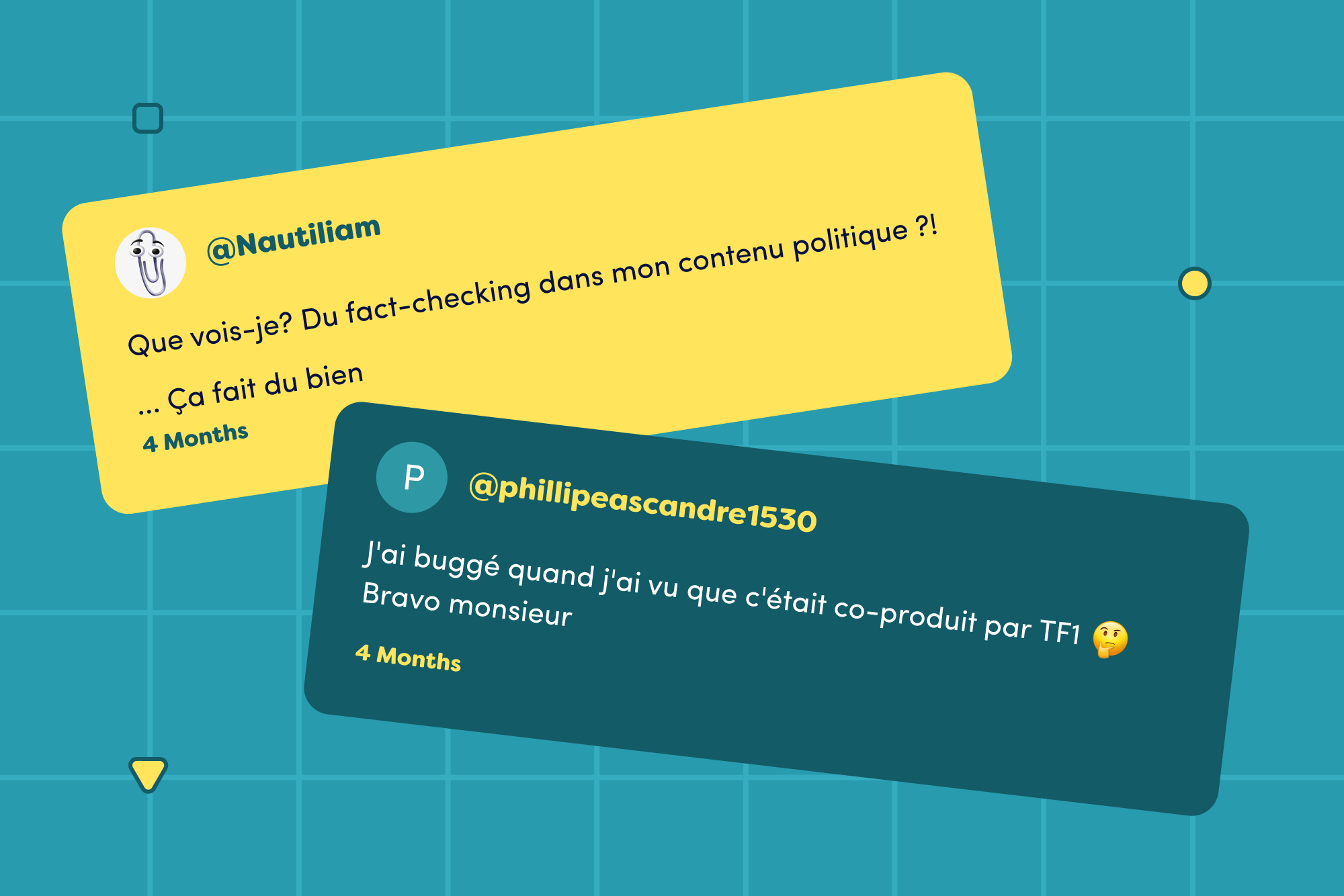
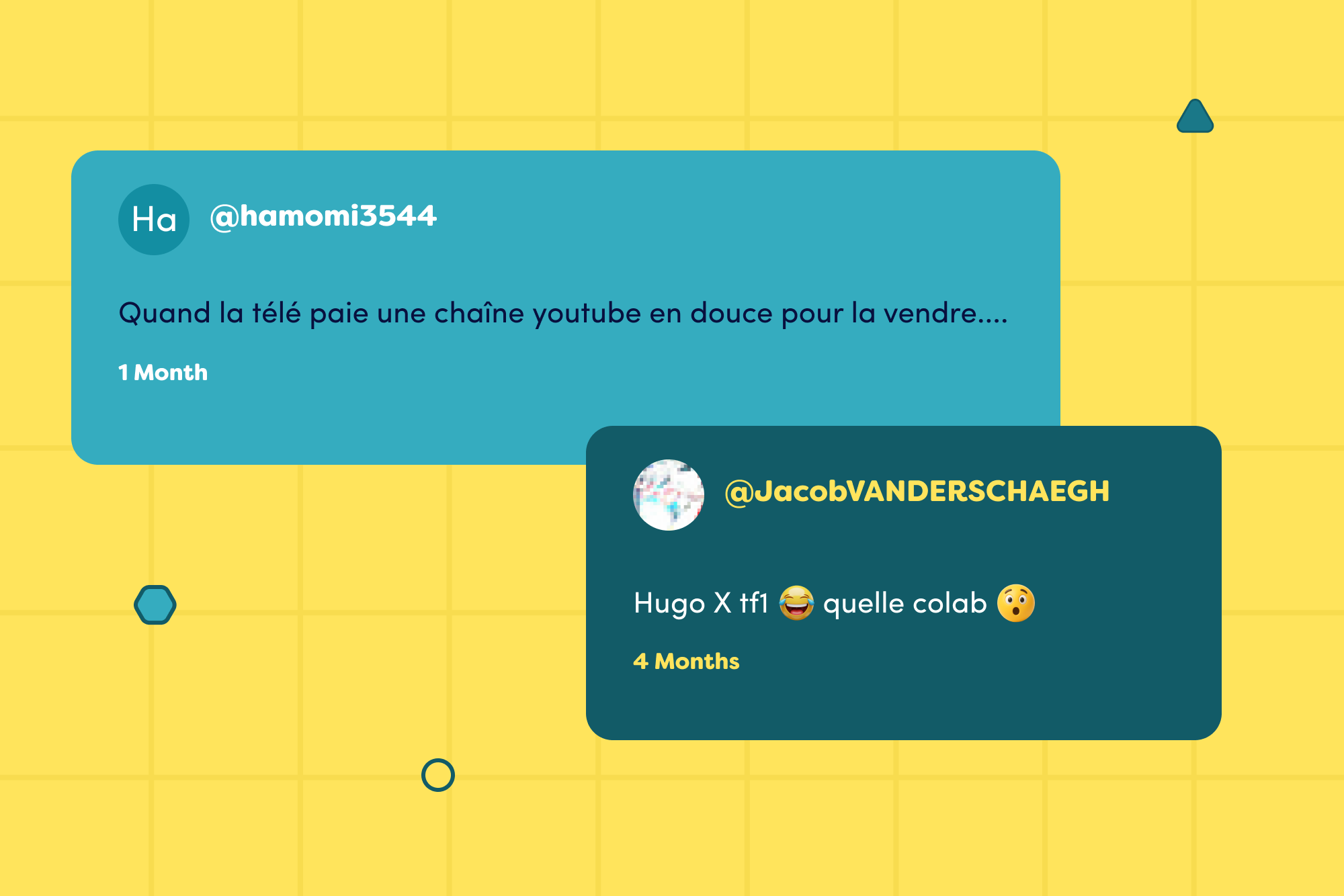
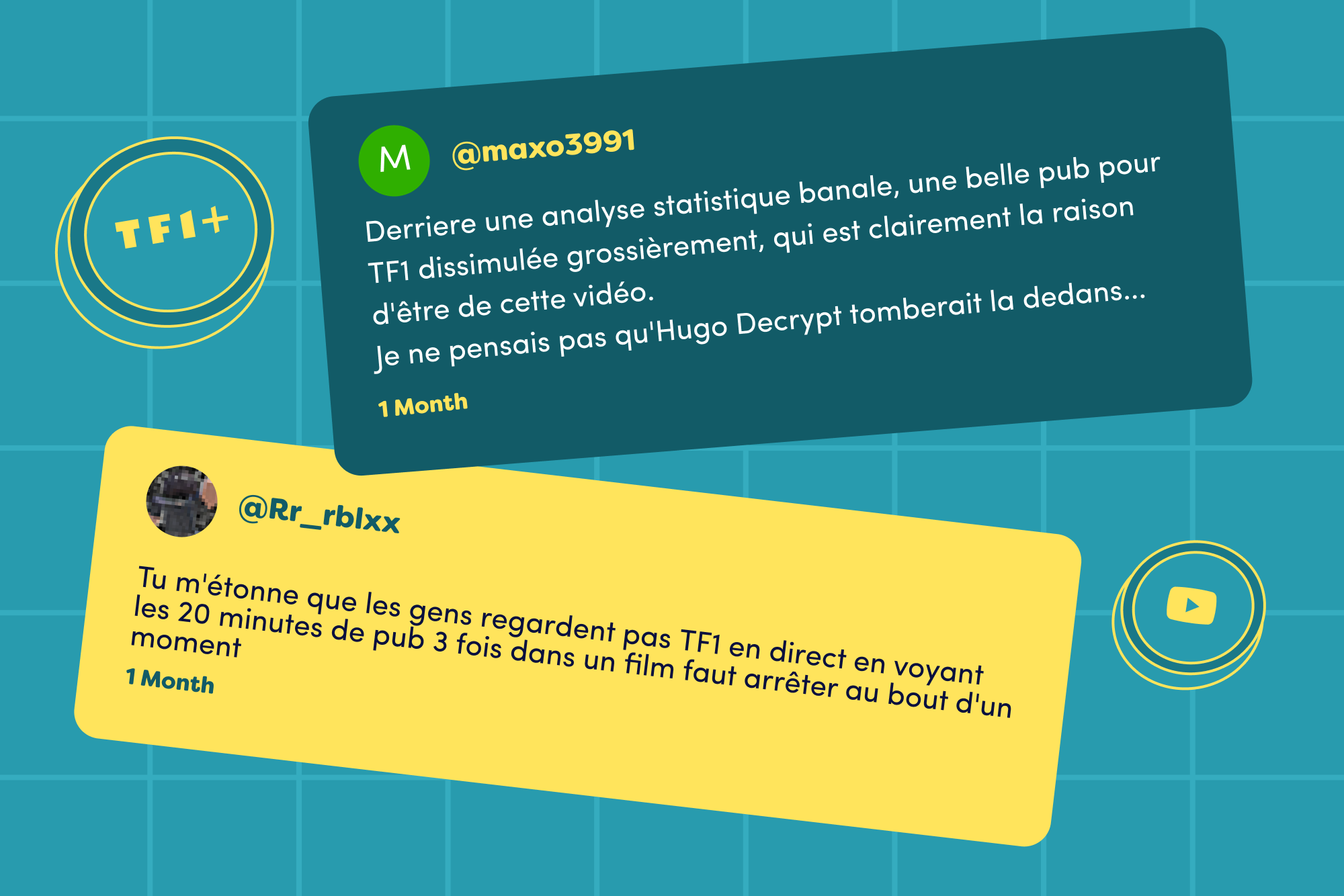
Not every experiment has landed as cleanly. In January, 2026 TF1 and HugoDécrypte ran declared sponsored content on YouTube Shorts and Instagram Reels about youth media habits. But the sponsorship drew pushback from Travers’ own audience, who questioned whether it compromised his independence, even though the collaboration was clearly disclosed.
“Audiences today expect transparency, but also independence,” Caulliez says. “Even if a partnership is clearly disclosed, audiences can still react negatively if they feel the creator is becoming too close to the institution.” It’s the exact tension the STEPP framework is built to catch: disclosure alone doesn’t guarantee an audience reads a partnership as trustworthy.
Travers now finances a 42-person newsroom that includes 16 credentialed journalists. On the French program Quotidien, in 2025, and later, before the Senate, he was asked to explain how he supports such a structure. The 29-year-old creator described a two-part model: ad revenue from videos, and brand partnerships — clearly labeled, and never produced by the journalists on his team who hold press credentials. “I consider it, in a way, the least-bad model for what we want to do,” Travers said to Quotidien. The goal, he added, is to keep the channel free, reaching people “who might be informing themselves for the first time.”
Who Gets to Set the Rules for Creators?
While legacy outlets are racing to partner with creators; lawmakers are catching up to set regulations not only on this type of partnerships but also on how creators’ model operates. In April 2026, Travers and Gaspard G testified before a Senate, alongside streamer Jean Massiet. Senators pressed them on how to classify what they do, the risk of algorithmic manipulation before the 2027 elections, and on whether broadcast-era rules make sense online.
Neither creator fully answered the question of what they are. Travers described spending nearly two days in 2024 at a UNESCO roundtable specifically wrestling with this question and not reaching a conclusion. Gaspard G said he considers the label unimportant, and that what matters is audience perception. But that raises a question: are they still on the hook for the norms and scrutiny that come with the label, like journalism’s professional code and the regulatory rules that apply to broadcasters? After all, they are still getting treated as credible news sources — not only by audiences, but also when they partner with an outlet like TF1.
On the risk of algorithmic manipulation ahead of the 2027 elections, both downplayed the danger at home, pointing instead to foreign interference campaigns rather than the platforms themselves. Although, he acknowledged platforms aren’t neutral, citing TikTok’s role in Romania's 2024 presidential election, which was annulled after a coordinated TikTok campaign helped propel a fringe far-right candidate to a surprise first-round win.
Gaspard G, who is also vice-president ofthe union representing France’s content creators, the UMICC, told senators how he pushed France’s public film and video funding agency, the CNC, to raise its creator fund from €1.8 million to €3 million in 2026. He called the amount “a drop in the bucket” of the €43 million he says Google and Meta pay the CNC in taxes each year. Gaspard G added that most of this money goes to fund established cinema, not new creators like him.
A day after the hearing, the CNC suspended the fund completely. This happened after a streamer, newly named to the jury that picks which creators get funded, said on a livestream that she would refuse to support far-right creators. Critics said this showed the jury’s own bias. Gaspard G reacted telling Le Parisien: “The CNC is giving a gift to the far right.”
On regulation, Gaspard G and Massiet told senators: rules built for broadcast, like ARCOM’s (France’s equivalent of the FCC) equal-airtime requirements, don’t make sense online. As Massiet put it, TV and radio have a limited number of channels; but anyone can start a YouTube account.
While the rules are still being written, TF1 and creators continue to explore formats and alliances. The experiments that didn’t work out were precisely the ones that raised ethical concerns around editorial independence and financial ties. Trust seems to travel when the creator keeps editorial control and the institution supplies raw material. On TikTok, Thuillier’s told Le Figaro, TF1 still ranks third among French news accounts, Brut, the social-first outlet known for its short-form video, and HugoDécrypte itself.
Brazilian-American journalist & strategist with 15 years of experience using storytelling to build community in news and tech. She’s worked in nonprofit and legacy media & tech startups (CalMatters, O Globo, Hive). Ana is on NAHJ LGBTQIA+ Task Force.
A statewide newsroom pivoted from outdoors creators to an immigration investigator and came away with two co-reported investigations and a reusable collaboration agreement other newsrooms can adopt.
A newsroom with no dedicated social staff used the cohort to assemble a cross-team working group and plan its first original creator collaboration, a series on the city's beloved sausage culture.
For a nonpartisan newsroom covering politics, the toughest part of a creator partnership came before any outreach: deciding which creators it could work with without putting its credibility at risk.