
CatchLight Local and Influencer Journalism Launch Creator Collaboration Cohort
The eight-week program, led by Influencer Journalism, will equip five newsrooms with funding, coaching, and a proven framework for creator partnerships
The eight-week program, led by Influencer Journalism, will equip five newsrooms with funding, coaching, and a proven framework for creator partnerships

The latest High Country News collab proves the best creator partnerships aren't where you think
375 journalists lost their jobs at The Washington Post. The answer isn't solo vs. institutional but what we build between the two.
How the Memphis newsroom set boundaries, handled a crisis, and built a model other outlets can follow


Most newsrooms say they want to meet people where they are, serve the community, and build a sustainable model, but few abandon legacy habits that hold them back. MLK50: Justice Through Journalism in Memphis is different. Founded by Wendi C. Thomas in 2017, the nonprofit addresses poverty, power, and policy — and demonstrates how bold choices yield significant benefits.
In March 2025, MLK50 launched a Creator-in-Residence program with Amber Sherman, a local policy organizer and TikTok creator with 45,500 followers across platforms. Her content spans yoga, lifestyle, doula work, and civic engagement, mixing a playful persona with serious topics. Sherman’s motivation? Accountability. “I really wanted to expand how I was making content. I wanted to be more consistent, and the contract, two videos per week, pushes me to do that. I also love MLK50,” she told Influencer Journalism.
For MLK50, it’s about building trust and expanding reach. “Amber already knows how to talk to our core readers. She already has their trust. So really, she was lending that trust to us and helping us be more credible,” says MLK50 co-executive director Adrienne Johnson Martin.
The partnership has its complexities: Sherman is a newsmaker, her content lives mostly on social media, and there’s no push to visit MLK50’s website. “I’m not going to say, ‘Go read the newspaper.’ My goal is to help you understand a topic… usually, people will go do the work on their own. If they have a question, they’ll ask me,” says Sherman. She sees viewers attending city council meetings and taking action on their own — a tangible measure of real impact. Early results speak for themselves: 665% growth in social interactions, a new hire, a rethink of distribution strategies, funder attention, and tangible value for the community.
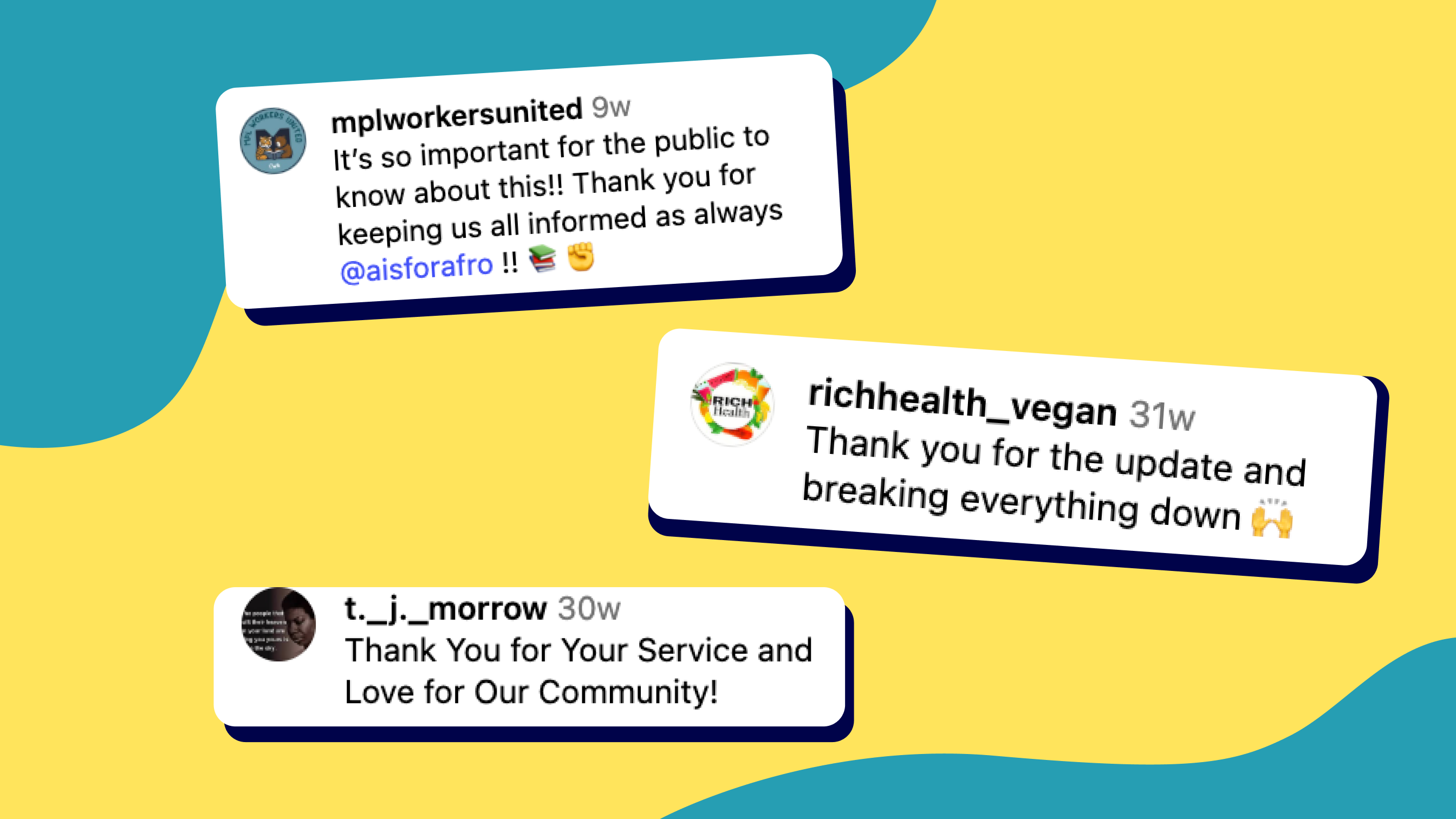
The program began with an Instagram comment. After posting a video with an investigative feel, Sherman was encouraged by someone in the MLK50 team to pitch a project. Already known to the newsroom for her policy work and op-eds, she submitted a short proposal inspired by TikTok creator Garrison Hayes’ residency at Mother Jones. “I wasn’t married to anything except the type of content I wanted to make,” Sherman said.
Martin brought the idea to her co-executive director. “We had started the year thinking about two main goals: fighting misinformation and being more deeply rooted in the community. When Amber approached us, it seemed like a good idea,” she said. After researching Mother Jones' residency and consulting the editor at a convening, Martin adapted it for Memphis and Sherman’s voices.
Next, leadership presented the idea to the staff. Two main concerns surfaced: “Amber is a newsmaker. How do we manage that?” and “Does Amber do things that would then be associated with MLK50?” Martin recalled.
In this context, MLK50 used the term "newsmaker" to describe Amber’s visibility as a policy organizer and community leader. She is someone whose work attracts media attention, a person journalists frequently quote and feature. Sherman, however, avoids the label activist, explaining, “people try to call me an activist all the time and I clearly correct them and say I’m a policy organizer,” noting that the term feels “charged” and that her work centers on shaping policy rather than championing a single cause.
The team ultimately set clear boundaries: Sherman would focus on civic education, with branding and messaging reinforcing that distinction. Once concerns were addressed, she co-designed the year-long residency with key team members, formalizing a contract that included weekly posts, monthly payments, and digital training opportunities for MLK50’s staff.
The collaboration evolved over time. “Occasionally, [the video] it's based on something we reported or things we can't get to because we're a small team. She's like another reporter on the team,” Martin explained.
Sherman’s role also required careful attention to ethics and compliance. Early in 2025, following Trump’s inauguration, funders closely monitored nonprofit messaging, pressuring newsrooms to avoid appearing opinionated or partisan. “The challenge for us was that there are certain things fundamentally that we believe in, that we don't think that they are two sides to,” Martin explained. The newsroom holds certain positions — abortion is health care, trans rights are human rights, power should be interrogated — as fundamental truths rather than opinions.
Sherman’s education work reflects that worldview, which the team views as non-negotiable. Her work has gained broader recognition through this year's Project C ONA Creator Cohort, highlighting her growing role as a creator-model journalist in the industry.
When concerns arose about Sherman’s unbranded work, MLK50 created a landing page for the Creator-in-Residence program, clarifying the residency relationship and her independence outside branded content.
“One of the things people need to understand … is that the reason you were attracted to them [creators/influencers] was because of that other stuff they’re doing. So you can’t… be afraid of that person,” Martin said.
During Sherman’s tenure at MLK50, the newsroom faced unexpected challenges beyond the usual ethical considerations. A few months into the partnership, Sherman was briefly detained for disorderly conduct during a police operation. “We were monitoring it, and I responded with the same level of concern that I could with someone on staff,” said Adrienne Martin, co-executive director.
MLK50 maintained close communication and coordinated with reporters on the ground while Sherman’s phone was inaccessible. The incident wasn’t reported at MLK50; their coverage instead focused on its implications: Sherman’s removal from a local police reform task force. When ready, Sherman shared her experience on her own platform.
Each week, the creator records videos based on what she’s seeing in her community and shares them with MLK50 a day before posting. The videos go to Slack for transcription and are tracked in Google Docs by topic and date. Scripts get light edits for clarity. “Sometimes there’s repetition or terms people might not understand, like FOIA (Freedom of Information Act). We break it down so everyone can follow,” explains Martin.
Martin edits scripts and texts Sherman for review, careful to preserve authenticity. Sherman re-records using a teleprompter app, uploads to TikTok and Instagram, and tags MLK50 as a co-creator. A new community engagement manager now ensures posts display correctly and manages comments to prevent past hiccups.
Her 1–3 minute TikToks mix civic education and community voice, covering policy, housing, public safety, always wrapped in humor, empathy, and sometimes even pop culture references. She opens by naming the MLK50 partnership and closes with her signature: “Stay aware but not afraid, informed but not incapacitated, and educated because this is not the end-all-be-all. Alright y’all, peace.” Martin and Sherman say that line helps counter the dread people often feel when consuming news.
Her videos feature explainers on public hearings, civic participation tutorials (how to engage with a public official, how to lobby a legislator, and how to file a comment card), and misinformation debunks. Calls to action and direct replies keep audiences engaged, while MLK50 continues the conversation in comments, helping to build trust and civic participation.
MLK50 is redefining what impact looks like. The partnership revealed that there are two distinct audiences: those who read the website and those who follow along on social media through Sherman’s videos. “Our core readership is the people who go to the website,” said Martin. “But those are different people than the people in the community. Most of the people we really serve are working-class to poor people. They may not have time to go to a website or read an email.”
She added, “Doing this work with Amber has taught us to go where people are, like Instagram and TikTok. It’s opened the door to understanding all the ways we can share information, instead of just trying to get people to the website, which isn’t always effective or reasonable.” MLK50 has continued to expand its touchpoints offline: printing articles, creating one-sheets, distributing them at libraries, and hosting local events.
But that doesn’t mean social followers aren’t converting into engaged readers.
Sherman has seen it happen firsthand in her community. “So many people don’t even read newspapers, but they will watch my videos,” Sherman said. “After watching, they pay more attention to MLK50. They follow, sign up for the newsletter, subscribe to socials.”
As MLK50 prepares a new report of its findings, the organization is already looking ahead. A new creator in residence could start next year after Sherman’s contract ends, but Sherman herself may stay involved. “We want to figure out a way to keep Amber because she adds something no one else can,” Martin said.
“So many people don’t even read newspapers, but they will watch my videos. After watching, they pay more attention to MLK50. They follow, sign up for the newsletter, subscribe to socials.”
At the same time, an open call could attract a diverse range of creatives. “Once you get open to the idea that there’s not one way to sort of reach people, it becomes exciting. Like, could it be a painter?,” envisions Martin. The program’s growth is fueled by promising signs of new funding. “A budget is a reflection of what you think is important,” Martin added.

How a 50-year-old newsroom experimented with social media creators to reach communities it hadn’t reached before while keeping loyal readers engaged

As influencers shape how young audiences get news, this piece explores what journalism can learn and where it must draw the line.