
CatchLight Local and Influencer Journalism Launch Creator Collaboration Cohort
The eight-week program, led by Influencer Journalism, will equip five newsrooms with funding, coaching, and a proven framework for creator partnerships
The eight-week program, led by Influencer Journalism, will equip five newsrooms with funding, coaching, and a proven framework for creator partnerships

The latest High Country News collab proves the best creator partnerships aren't where you think
375 journalists lost their jobs at The Washington Post. The answer isn't solo vs. institutional but what we build between the two.
Without rigorous, clear disclosure in every partnership, both the newsroom's reputation and the creator's authenticity are at stake.

Transparency is a pillar of our STEPP Framework for a reason. When audiences don't understand the relationship between a creator and a newsroom, trust erodes for both parties.
In an era when just 40% of people globally say they trust the news, according to the 2025 Reuters Institute Digital News Report, every point of credibility matters. For newsrooms experimenting with creator partnerships, the temptation to let disclosures slide can feel harmless. It isn't.
The T in our STEPP stands for Transparency, and it exists because trust is the currency that makes newsroom-creator collaborations work. Without rigorous, clear disclosure in every partnership, both the newsroom's reputation and the creator's authenticity are at stake.
A 2024 EU consumer sweep found that 97% of reviewed influencers posted commercial content, but only about 20% systematically indicated that their posts were advertisements. In Spain, regulators found that 77.75% of investigated influencer content failed to comply with disclosure obligations.
This isn't just a European problem. The FTC's updated Endorsement Guides now require disclosures to be "difficult to miss" and "easily understandable by ordinary consumers." The era of burying "#ad" in a sea of hashtags is over.
For journalism organizations, the stakes are even higher. When audiences discover undisclosed relationships after the fact, they don't just lose trust in the creator,they lose trust in the newsroom that partnered with them. As the American Press Institute's ethical roadmap for influencer collaborations puts it: "How do you know this information is fair and accurate?" and "How will it impact people's perception of the independence of your news organization?" are questions that must be answered proactively, not reactively.
At Influencer Journalism, we work with newsrooms to implement disclosure practices that go beyond minimum legal compliance. Through the STEPP Framework, Transparency means journalists disclose their funding, methods, and sources and that standard extends to every creator partnership.
Effective disclosure includes several key elements. First, placement matters: disclosures must appear where audiences will immediately see them, not below the fold or after a "more" break. The FTC has specifically noted that built-in platform tools like Instagram's "Paid Partnership" label may not be sufficient on their own.
Second, clarity is essential. Vague terms like "collaboration" or "thanks to the brand" don't cut it. API and Trusting News recommend explicit language such as "This is a paid partnership, meaning we paid [creator] for their reporting" or "This collaboration is funded by [newsroom]."
Third, consistency across all touchpoints is critical. The disclosure should appear everywhere the content lives—in the video itself, in captions, in any newsletter mentions, and on the newsroom's site.
Finally, explaining the editorial process adds another layer of trust. Audiences should understand how the content was fact-checked, who had editorial control, and how the newsroom maintains its independence.
One of the persistent myths in creator partnerships is that disclosure kills engagement. The evidence tells a different story.
Research published in the International Journal of Research in Marketing found that while disclosure can initially affect perceptions of advertising, consumers also express appreciation for transparency when creators are upfront about partnerships. This appreciation can actually increase perceived trustworthiness and engagement.
As one 2025 industry analysis noted, 63% of shoppers say they're more likely to buy a product recommended by a creator they trust, and 67% of consumers are most compelled by content that comes across as genuine. Transparency is what signals genuineness—not the absence of a commercial relationship, but the honest acknowledgment of it.
This aligns with what audiences tell researchers they want from journalism. The 2025 Reuters Digital News Report found that audiences specifically requested "more evidence for claims, including fuller disclosure of sources, and better transparency over funding and conflicts of interest."
 Adriana Lacy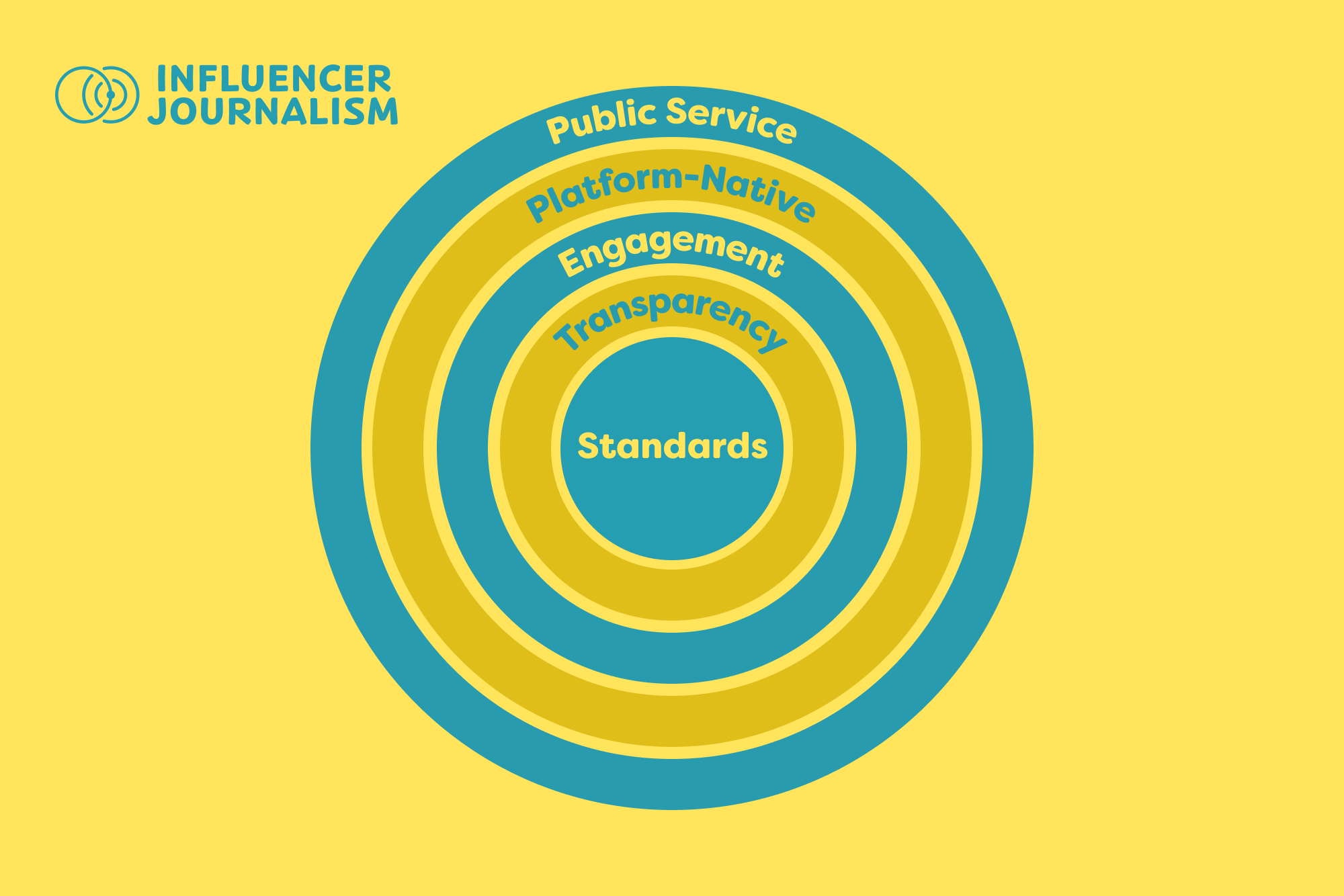
American Press Institute's 2025 Influencer Learning Cohort, shows that newsrooms can implement disclosure practices that strengthen rather than undermine their partnerships.
Pittsburgh's PublicSource built a diverse map of more than 40 local creators working us. Each partnership includes clear disclosure language that explains not just the financial relationship, but why the collaboration serves the community.
THE CITY in New York partnered with The Pigeon Post on a video explainer series ahead of the 2025 mayoral primary. The collaboration included transparent labeling that helped THE CITY reach a larger audience while maintaining credibility—the explainers were praised in the comments precisely because audiences understood what they were watching.
Factchequeado developed training for Latino creators that specifically addresses how to communicate transparently about partnerships while countering disinformation—recognizing that disclosure is part of building trust, not undermining it.
Newsrooms that don't take disclosure seriously now will face growing pressure from regulators. The FTC can impose civil penalties of up to $53,088 per violation as of 2025, and has been actively sending warning letters to creators who fail to properly disclose partnerships.
In Europe, the regulatory framework is expanding rapidly. Italy's communications authority AGCOM introduced binding guidelines for creators with at least 500,000 followers, imposing transparency obligations similar to those for traditional media. France's 2023 law requires advertising disclosures and prohibits promotion of certain high-risk products. Slovenia's new Media Act specifically addresses influencers who create content capable of shaping public opinion.
The European Commission's forthcoming Digital Fairness Act is expected to strengthen requirements further. As one European Parliament briefing noted, disclosure should be "prominent and clearly distinguished from other content" and "appear where consumers will immediately see it."
For newsrooms, these regulations aren't just about avoiding fines. They represent a broader shift toward holding all communicators—whether traditional journalists, creators, or hybrid partnerships—to standards of transparency.
Based on the STEPP Framework and API's ethical guidelines, every creator partnership should address these questions:
Disclose the relationship. Explain who is partnering, why, and what the audience can expect. Don't assume audiences will figure it out.
Talk about the money. If money is changing hands—in either direction—be explicit. You don't need dollar amounts, but clarity about who is funding the work is essential.
Explain fact-checking processes. How was the content verified? Who bears responsibility for accuracy? This is especially important for journalism organizations, where editorial standards are part of the value proposition.
Clarify editorial control. Who had final say over the content? How were disagreements resolved? This addresses audience concerns about independence.
Address potential conflicts. If there are reasons audiences might question the partnership, address them head-on rather than hoping no one notices.
Link to your ethics policy. Every disclosure is an opportunity to reinforce your organization's commitment to transparency. Point audiences to where they can learn more about your standards.
The cost of inadequate disclosure isn't just legal exposure. It's the erosion of the very trust that makes newsroom-creator partnerships valuable in the first place.
When Pew Research Center surveyed Americans in September 2025, they found that trust in national news organizations had dropped 11 percentage points since March of that year. In this environment, every partnership is an opportunity to either rebuild credibility or further erode it.
The Reuters Institute found that when asked what would improve their trust in news, audiences specifically mentioned "better transparency over funding and conflicts of interest" and "more prominent corrections when publications get things wrong."
Creator partnerships, done well, can help newsrooms reach audiences they've been missing—particularly younger demographics who are three times more likely to use social media for news. But "done well" requires treating transparency as foundational, not optional.
At Influencer Journalism, Transparency sits alongside Standards, Engagement, Platform-Native content, and Public Service as the five pillars of responsible newsroom-creator collaboration.
Transparency is about recognizing that audiences are sophisticated consumers of media who deserve to understand the relationships behind the content they consume. When creators and newsrooms are upfront about their partnerships, they're treating audiences as partners in the information ecosystem rather than targets to be influenced.
The data supports what journalism ethics has always taught: trust is built through transparency, not despite it. In creator partnerships, cutting corners on disclosure doesn't protect the relationship. It undermines everything the partnership is meant to achieve.

New research from FT Strategies and Knight Lab confirms what we’ve been saying: Next gen audiences are hungry for news. The problem isn’t demand—it’s delivery

Introducing the STEPP Framework, MLK50's creator-in-residence experiment, and why disclosure matters more than you think

We offer a structured approach to navigating this emerging space while protecting what matters most: the public’s trust in journalism.